


Deep delving method is a particular local placement of organic and chemical fertilizers in soils. Winter deep delving prepares fertilizers to be consumed by trees at the beginning of the growing season. Fruit trees mainly suffer from different types of deficiencies due to the presence of active lime in lime soils, excessive bicarbonate in irrigating water, organic materials shortage, incorrect fertilizers application (top-dressing method), slight mobility of most of the fertilizers (particularly phosphate and micronutrient ones), and insufficient fertilizer and water absorption. Applying fertilizers via this method is far more efficient than top-dressing method. Other advantages of this method are better absorption by roots, respiration, and water permeability through the pit around the root.
The advantages of deep delving
- Preventing the shoot tip of fruit trees from dieback
- Growth of fruit trees roots in lime soils
- Increasing the leaf area in fruit trees
- Improving the quantity and quality of fruits
- Increasing water infiltration through the pores filled with organic materials
Where to dig a hole in deep delving method
The best place to dig a hole is the last one third of the shadow of the tree. Young and active roots are mostly concentrated in this area. Delving in this area causes the least damage to main and thick roots. The roots are able to directly absorb their favorite nutrients leading to a decrease in weed growth.
The holes should preferably be along the water flow. The number of the holes differ depending on the type of the tree, soil condition, age of the tree, etc., but generally 2-4 holes would be appropriate for trees of 10 years old or above. The depth of the holes also varies based on the type of the tree; they are usually 30-50 cm deep. It must be noticed that the holes shouldn’t be filled up with the same old soil, yet they should be refilled with a mixture of a fertilizer and an organic material such as rotted manure or peat.
This method is particularly adequate for arid regions. If the holes are kept in a proper condition, digging once would be enough for several years.
Since Khazra Chelated Nano fertilizers enjoy a special and unique structure, they cause less leaching and higher availability percentage to the roots in deep delving.
Foliar spraying is a supplementary way to decrease fertilizer application amount. It is a rather easy, fast and efficient method, mainly used in the following cases:
- plant immediate need to a special element
- low absorption of the soil elements in early spring due to low roots activity
- in conditions when the soil is not suitable for elements absorption (too high or low pH level, too high or low moisture, deficient ventilation, etc.)
- in lime soils with high pH where there is a high probability of some elements deficiency such as iron, zinc, manganese, and copper
The competition rises among fruits and roots on nutrient absorption during trees reproductive stage. Therefore, it is very likely to observe roots suffering nutrients deficiency and slow growth. This competition can be reduced by foliar spraying to prevent those deficiencies.
Different terms influence absorbing rate of applied solution:
- light
- temperature
- relative moisture
- leaf age
- leaf area
- plant nutrition condition
- pH of the applied solution
- surfactants
Low light intensity, low temperature, and relative moisture increase the absorption of applied solution; moreover, absorption rate enhances if the leaf is younger and its surface is larger.
It must be noted that the weaker the plant is in nutrition, the more and the faster elements absorption is. Various elements would reach the maximum absorption at different pH levels. For instance, phosphorus is absorbed best at pH 5-6 and calcium at pH 7. Applying surfactants leads to a reduction in surface tension of water and an increase in the contact surface of the solution and the leaf, resulting in more solution absorption. However, Khazra Chelated Nano fertilizers do not need surfactants to get absorbed through foliar spraying.
Considering the importance and necessity of proper application time and method of Khazra Chelated Nano fertilizers to achieve the highest function, the followings are required during foliar spraying:
- Owing to Khazra Chelated Nano fertilizers capacity to be used both through soil application and foliar spraying, there is no limitation on applying either method, although using each method at least once during the growth period would have better effects.
- Mixing calcium fertilizers with other fertilizers is not recommended. It will be better if they are applied individually.
- Do not apply any fertilizers on plants in flowering stage through foliar spraying; applying fertilizers at this stage causes flower drop.
- The best time to apply foliar spraying is early in the morning before the sunrise because of open stomata and high elements absorption rate at this time. If foliar spraying is not possible at this time, late hours of the day (before it gets dark) will be appropriate as well.
- Avoid mixing Khazra Chelated Nano fertilizers with pesticides containing copper.
- Foliar spraying ratio for young trees is the same, but in deep delving or fertigation the application amount is less.
- The ratio of “1 g/L” is the same as 1 gram in 1000 liters of water.
Seed priming is a process in which seeds are soaked in a solution(s) before cultivation to foster seed germination, increase the size of the root, and establish seedlings.
Different kinds of seed priming
- Simultaneous with winnowing in case they are mixed with pesticides.
- Mixing seeds and priming solution in one mixer: depending on the size of the mixer, seeds are put in it and priming solution is added and mixed with diluted water while the mixer is on, finally the mixture is left until it is beaten completely.
- Some specific amount of seed is put on the ground and the needed amount of priming solution is sprayed on the seeds while they are simultaneously being mixed with a shovel.
Seed priming with Khazra Nano Chelated Complete Micro and Zinc fertilizers:
Seed priming with Khazra Nano Chelated Complete Micro and Zinc fertilizers fosters seeds germination, accelerates protein synthesis, increases root volume and tillering in cereals, boosts seed phototropism strength, establishes seedlings more adequately, and increases resistance to drought, pests and diseases. It should be noted that Khazra Nano Chelated Complete Micro fertilizer is more effective than Khazra Nano Chelated Zinc fertilizer in terms of improving germination indexes.
Procedure
- Divide the field into different homogenous units based on the visual observation and farmer’s experience.
- Remove the surface litter at the sampling spot.
- Drive the auger to a plough depth of 15 cm and draw the soil sample.
- Collect at least 10 to 15 samples from each sampling unit and place in a bucket or tray.
- If auger is not available, make a ‘V’ shaped cut to a depth of 15 cm in the sampling spot using spade.
- Remove thick slices of soil from top to bottom of exposed face of the ‘V’ shaped cut and place in a clean container.
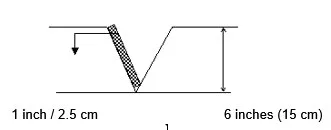
- Mix the samples thoroughly and remove foreign materials like roots, stones, pebbles and gravels.
- Reduce the bulk to about half to one kilogram by quartering or compartmentalization.
- Quartering is done by dividing the thoroughly mixed sample into four equal parts. The two opposite quarters are discarded and the remaining two quarters are remixed and the process repeated until the desired sample size is obtained.
- Compartmentalization is done by uniformly spreading the soil over a clean hard surface and dividing into smaller compartments by drawing lines along and across the length and breadth. From each compartment a pinch of soil is collected. This process is repeated till the desired quantity of sample is obtained.
- Collect the sample in a clean cloth or polythene bag.
- Label the bag with information like name of the farmer, location of the farm, survey number, previous crop grown, present crop, crop to be grown in the next season, date of collection, name of the sampler etc.
Collection of Soil Samples from a Profile
- After the profile has been exposed, clean one face of the pit carefully with a spade and note the succession and depth of each horizon.
- Prick the surface with a knife or edge of the spade to show up structure, color and compactness.
- Collect samples starting from the bottom most horizon first by holding a large basin at the bottom limit of the horizon while the soil above is loosened by a khurpi.
- Mix the sample and transfer to a polythene or cloth bag and label it.
Guidelines for Sampling Depth
| S.No. | Crop | Soil Sampling Depth | |
| Inches | cm | ||
| 1 | Grasses and grasslands | 2 | 5 |
| 2 | Rice, finger millet, groundnut, pearl millet, small millets etc.(shallow rooted crops) | 6 | 15 |
| 3 | Cotton, sugarcane, banana, tapioca, vegetables etc. (deep rooted crops) | 9 | 22 |
| 4 | Perennial crops, plantations and orchard crops | Three soil samples at 12, 24 and 36 inches | Three soil samples at 30, 60 and 90 cm |
All commonly used fertilizers can be replaced by Khazra Chelated Nano fertilizers. However, replacing all base fertilizers (such as urea, potassium oxides and phosphorus) in farms and gardens is not cost–effective in most cases, so it is preferable to apply Khazra fertilizers as additional/supplementary fertilizers according to instructions. The complete replacement of the Khazra Chelated Nano fertilizers in greenhouses is quite cost-effective and profitable. The basic fertilizers are the main fertilizers needed by the plants, which include N, P, and K (including chemical fertilizers, animal, and plant manure. The famous examples are urea fertilizers, potassium sulfate, and triple superphosphate).
Yes, it dose. Irrigation can be decreased due to increased water efficiency and ripening rate of agricultural products.
Khazra Chelated Nano fertilizers are synthetic organic compounds that are free of any kinds of hormones, toxins, and radioactivity.
Carbohydrate compounds in Khazra fertilizers positively affect soil physical structure, so not only do they not harm soil texture, but their application in consecutive growing seasons improves it.
It surly affects soil bio-fortification/enrichment. In addition, with an increase in macroelements absorption rate from soli, it restores balance in soil in terms of macroelements.
Method 1: Before cultivation, along with other solid and granular fertilizers, spread on the farm.
Method 2: In the form of foliar spraying on the aerobic organs of the rain-fed product. The main recommendation is the second method.
Yes, it is. It is recommended that it does not be used with copper pesticide. Technically, the use of pesticides and fertilizers together is not recommended.
Early morning or before the sunset.
Yes, it can, but to optimize fertilizer consumption, it is recommended to follow the instructions.
Yes, it can. The exact amount of fertilizer must be specified.
They can be applied through deep delving or simultaneous with irrigation.
Absorption rate and positive effects of nano fertilizers is far more than common fertilizers. The structure of chelates in chelated nano fertilizers is more stable than common chelates which leads to a great number of positive effects. Also, chelated nano fertilizers are applicable through both foliar spraying and soil application.
It is a carrier which holds elements and increases their absorption.
Salinity is prevalent in areas with coarse texture and low annual rate of precipitation. Khazra Chelated Nano fertilizers are completely absorbable in all kinds of soil (pH=3-11). Khazra fertilizers can overcome chlorosis and various types of deficiencies by releasing elements in such conditions and besides increase the plant resistance to water stress.
Yes, but they are not the same as common chemical fertilizers known worldwide; i.e., they are not like urea and potassium sulfate that are commonly known nowadays.
It does not cause any problems and the minerals in the fertilizer can be excreted by consuming a large amount of water.
If the fruit ripening stage is not complete yet and you have at least 1 month left before picking, you can apply Khazra Nano Chelated Super fertilizer through foliar spraying with the concentration of 2.5 g/L. Yet, the best result will be achieved when you use it in a proper deep delving season and then apply it through foliar spraying at the right time.
As regardsfungal diseases, if they are from downy mildew or rust family, foliar spraying may generally aggravate the problem. However, using elements such as iron, zinc, and manganese normally increases phenolic compounds in plant which subsequently leads to treatment and prevention of diseases in farm or garden crops. In such a condition, foliar spraying of Khazra Nano Chelated Copper fertilizer (1 g/L) is recommended once.
Yes. Silicon fertilizer increases plant resistance to parasites such as nematodes and piles.


